Projects

Our projects reflect our applied expertise in mechanical design, simulation, and technical validation for diverse industrial challenges. This selection showcases our work in component development, structural analysis, CFD simulation, design optimization, parts recovery, and detailed engineering, always focusing on performance, safety, and feasibility. More than just a visual sample, these projects represent how we approach real-world problems using engineering principles, modeling, and technical analysis.

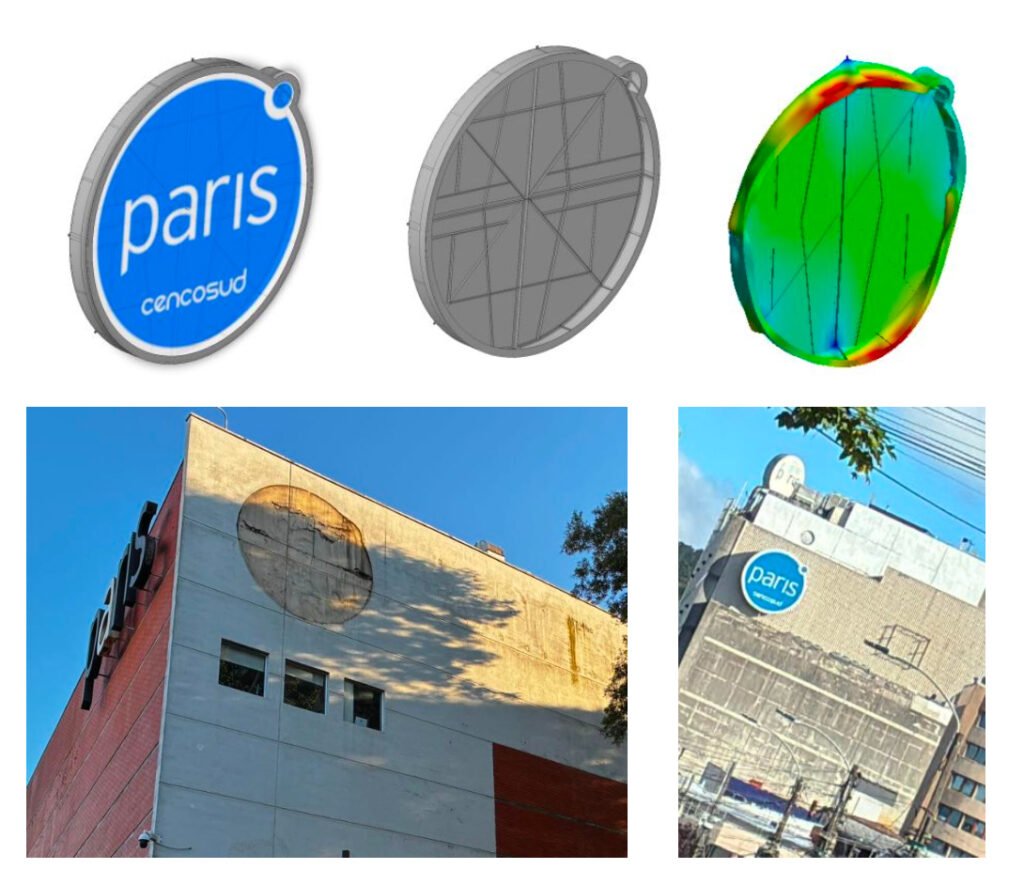
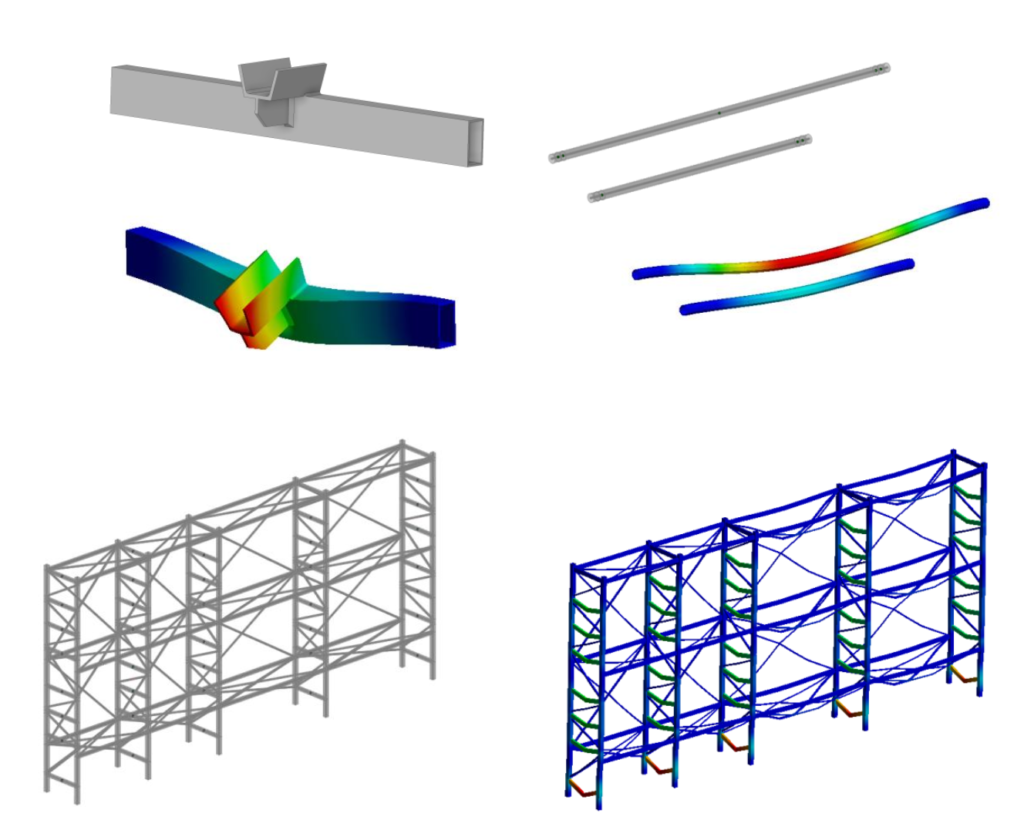
Evaluation of structure and components for recessed sign

Diseño de una estructura utilizada para sostener a gran altura, un cartel de logo de tienda retail de 4[m] de diámetro.

Analyses performed:

  • Static analysis with fatigued life
  • Dynamic analysis with data from the 8.8 Richter earthquake in Chile

Diseño de estructura para el almacenaje de tambores con rollos de cables, los cuales pueden pesar desde 1 a 2 [ton].

Analyses performed:

  • Static analysis with fatigued life of structure and cable reel shafts
  • Dynamic analysis with data from the 8.8 Richter earthquake in Chile

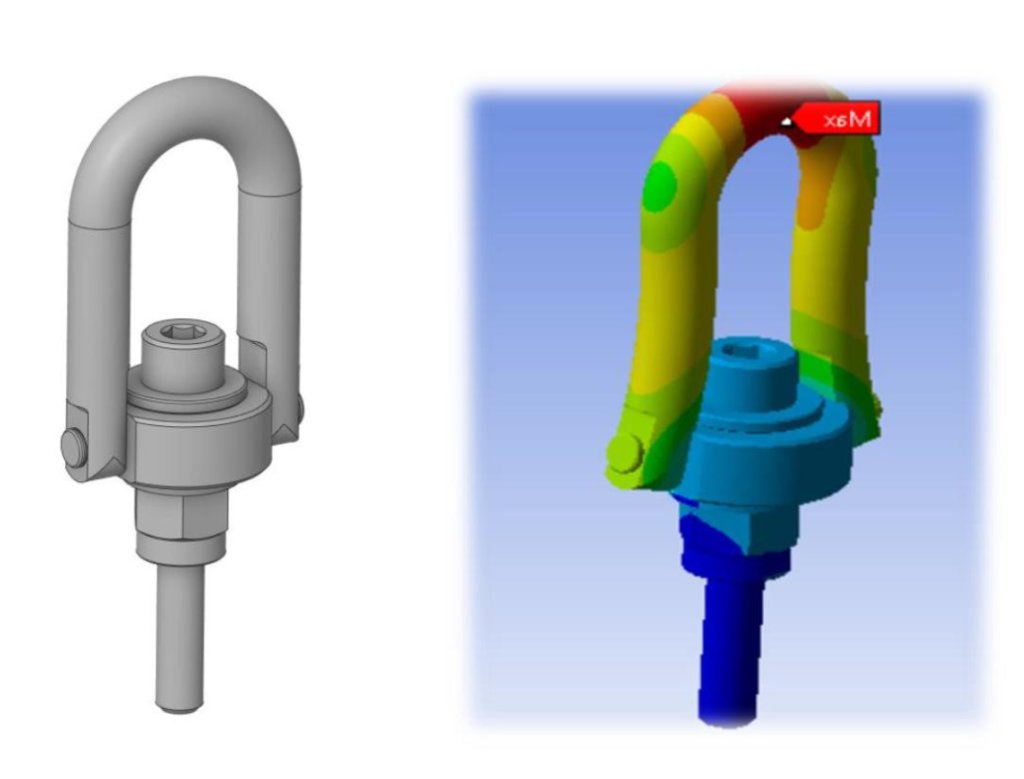
Análisis y comprobación de la seguridad de un cáncamo, para el izaje de un elemento de máquina cuyo peso era 7,5 [Ton].

Deliverables and results:

  • Equivalent stress contour
  • Deformation contour
  • Contours of analysis of a fatigued life
  • The safety factor is lower than expected, therefore design modifications are suggested to achieve the expected factor.


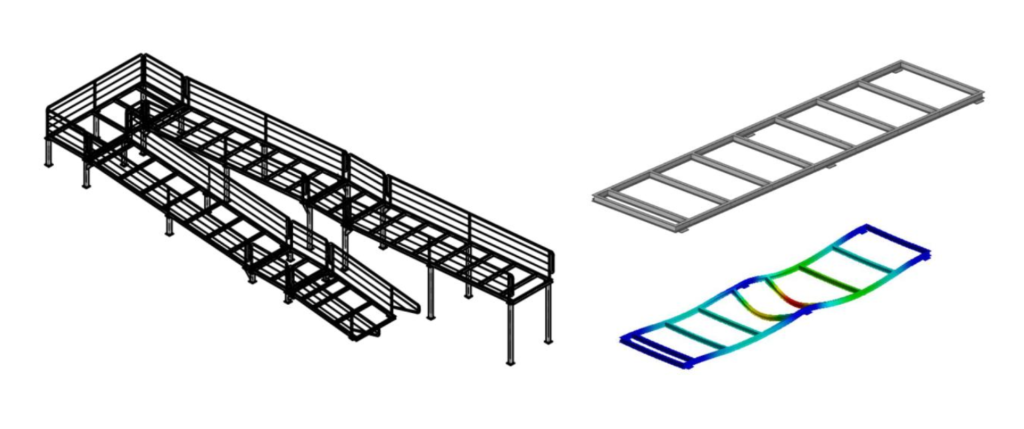
The project aimed to evaluate a proposed design for an access ramp to allow people with reduced mobility to move between the first and second floors of a building. The structure was intended for installation in a senior living facility, so it had to be very safe for wheelchair access.

Information was provided by an architect involved in the project, and the structure was refined and finished for analysis, resulting in a final 3D model. 

The final result was:

  • Equivalent stress contours
  • Deformation contours
  • Analysis of a fatigued life
  • Contours of static safety factors and fatigued life

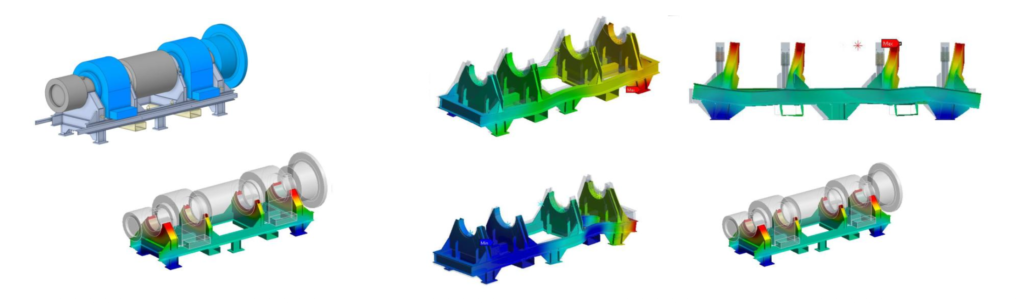
El proyecto tuvo por objetivo evaluar una propuesta de diseño de base de traslado para un eje, perteneciente a un molino SAG. Se incorporó al análisis información levantada previamente tanto de la base (diseño 3D generado) como información técnica del eje (planos y esquemas), con el fin de definir apoyos y cargas de la forma mas realista posible. El eje tenía un peso aproximado de 21,7 [ton].

Regarding the analysis, the following was obtained:

  • Equivalent stress contours
  • Deformation contours
  • Analysis of a fatigued life
  • Static safety factor contours and fatigued life.
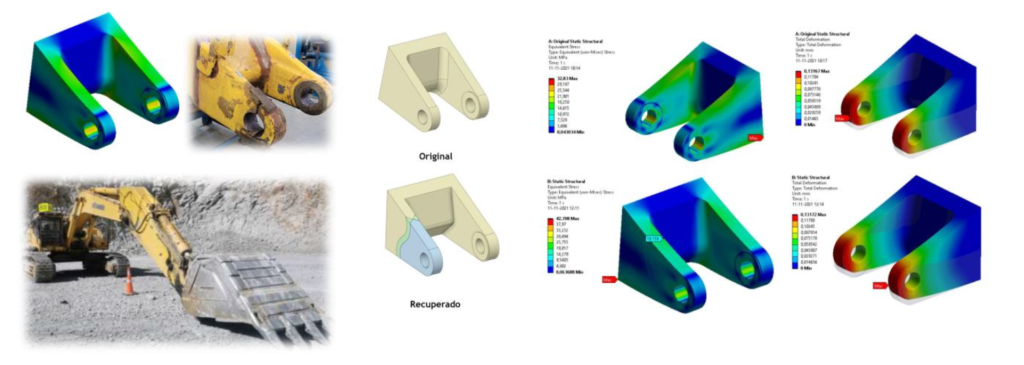
The project consists of evaluating the outcome of a process to repair a boom or arm on the stick end of a hydraulic excavator by adding a laminated plate insert and welding. To this end, a 3D model was created referencing the original part, and another referencing the repaired part, including the weld beads. This was done to simulate both models under identical conditions and compare the results, thus verifying the safety of the repair process. The results obtained in the project were indicative due to a lack of information regarding the loads acting on the part. However, it was concluded that there are no significant differences when comparing the original and the repaired model.

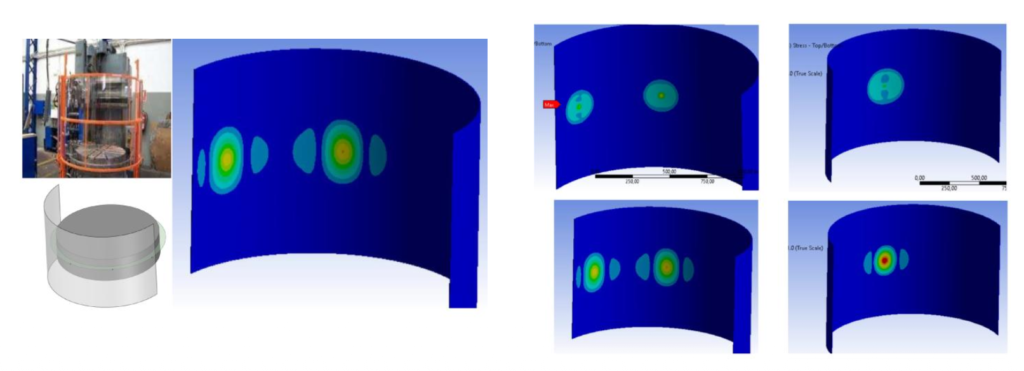
The project involved analyzing a case of impact from small elements that could detach from the main plate of a vertical lathe and strike a protective polycarbonate or plexiglass plate. Since the case analysis focused on impact between one element and another, an explicit dynamics analysis was performed. This finite element method is used to solve time-dependent problems involving high deformation, such as collisions, explosions, and impacts.

The following was obtained from the project:

  • Equivalent stress contours
  • Deformation contours
  • Analysis of a fatigued life

The results showed that the material and thickness chosen for the design of the protection safely support the elements that may detach from the main plate of the lathe.

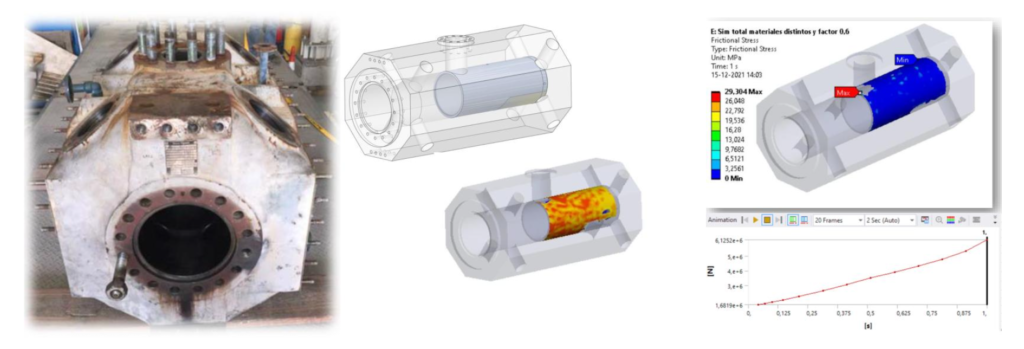
This project evaluated the interference fit of a liner inserted inside a compressor housing, specifically in the piston's circulation groove. The client wanted to understand the effects the liner insert might have on the housing, primarily by determining the reaction force.

The final result was:

  • Frictional stress
  • Reaction force (requested by client)
  • Equivalent effort
    Deformations
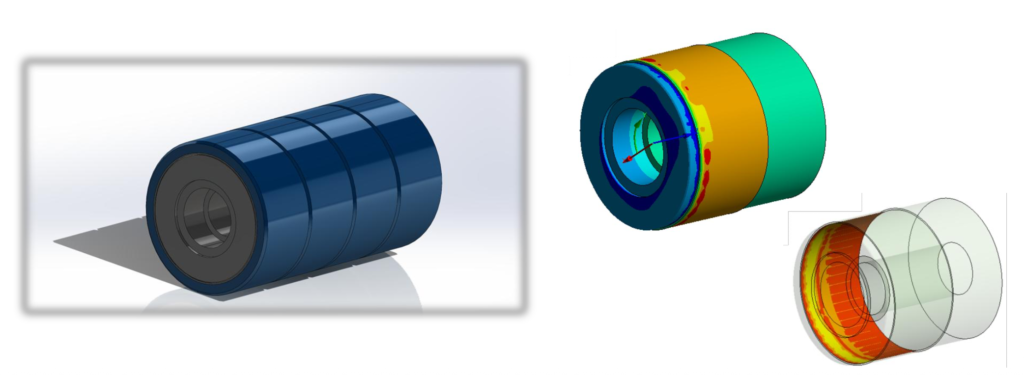
Evaluation of a mechanical assembly consisting of a solid cast steel block with four SAE 1045 steel rings vulcanized with an outer neoprene layer. The analysis involved examining the stresses in the interference zone between the solid block and the metal rings, as these areas exhibited failures.
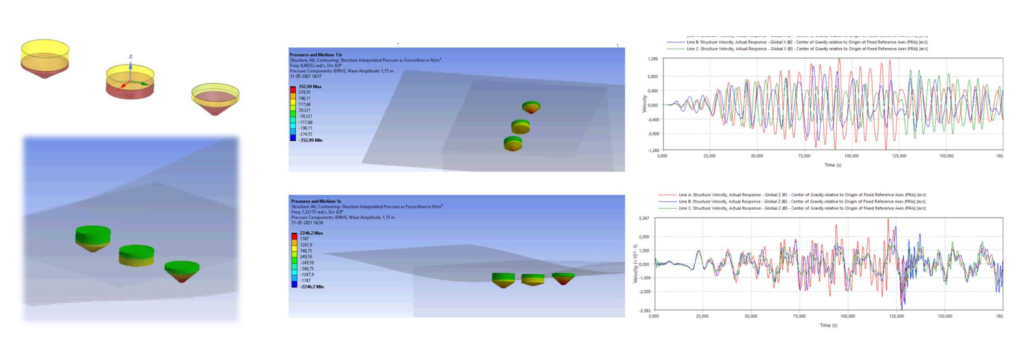
Hydrodynamic response analysis of buoys, wave energy prototype from MD SA Chile. This allowed for estimations of the energy levels that can be captured by the buoys, based on their geometry and installation site variables.

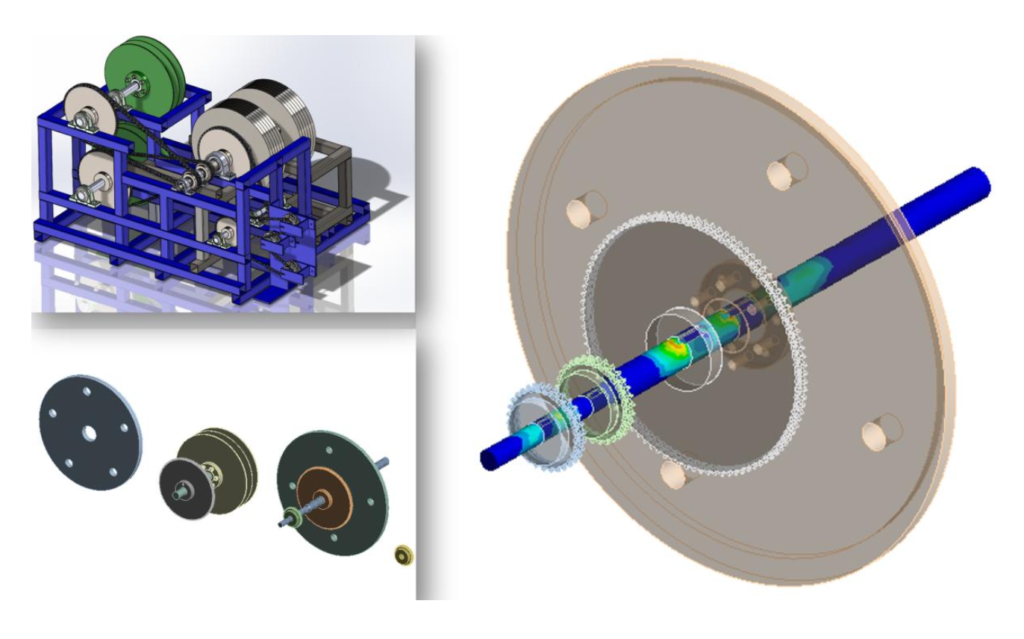
Dynamic analysis of rigid and flexible body mechanical transmission prototype, in particular to main shaft, from which the following was obtained:

  • Equivalent stress contour
  • Deformation contour
  • Result of dynamic behavior (Speeds, torque and resulting reaction forces).
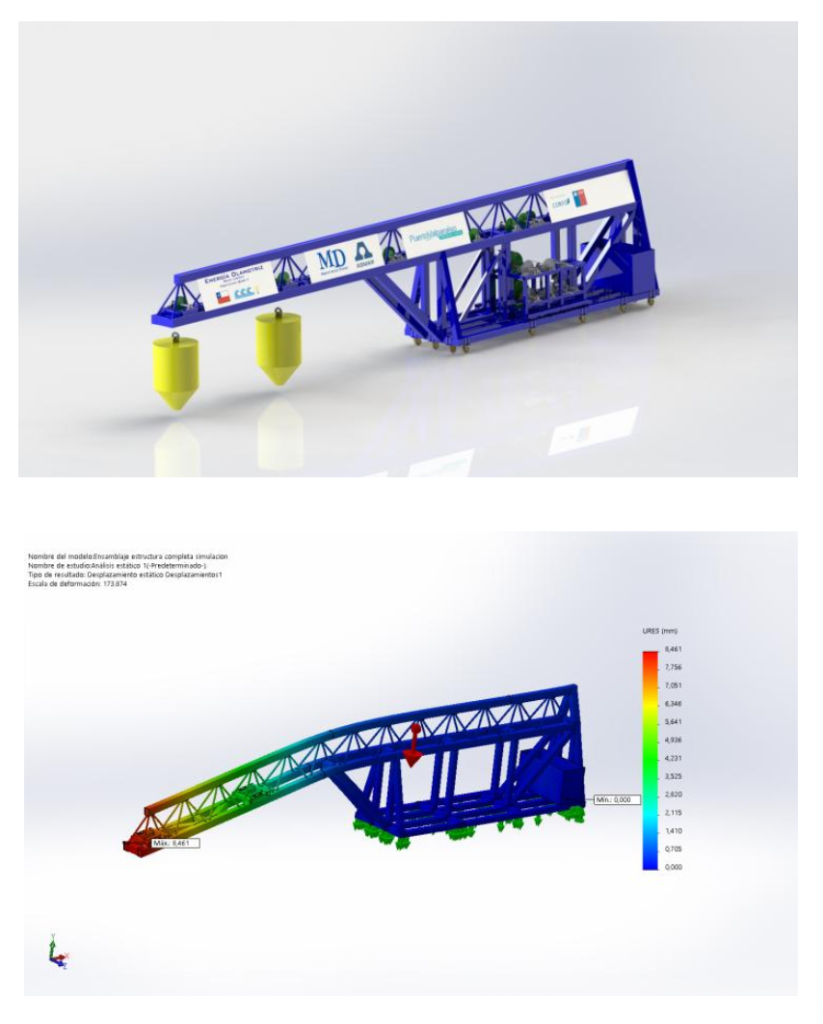
Conceptual and detailed design of a prototype capable of generating electricity from wave motion. It was developed using existing patents and preliminary designs held by the company, as well as new concepts. I performed detailed engineering with an emphasis on the use of commercially available materials and subcomponents, aiming for a robust main structure that would allow it to fulfill all its functions. Subsequently, I worked on the continuous improvement of the prototype's components and subsystems, enhancing its performance.
Detailed engineering design of a machine capable of converting wave motion into mechanical energy. The model was developed from previous prototypes and new concepts, taking into account the use of materials and subcomponents available on the local market.
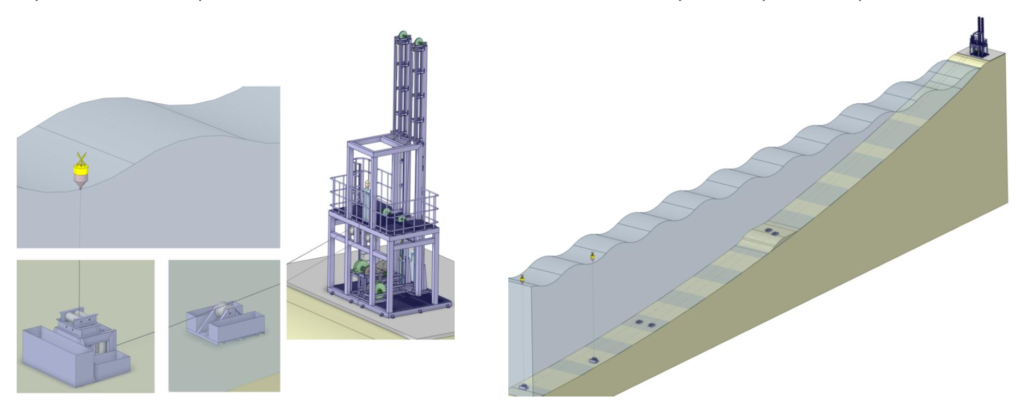
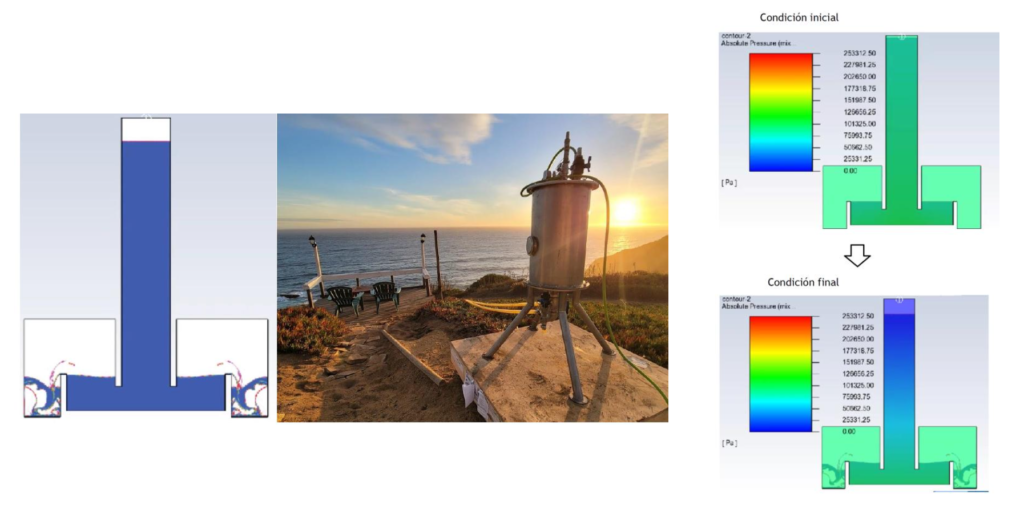
This project involved studying and simulating a water column drop to generate localized low pressure and desalinate seawater, all based on a patent and design protected by the Chilean company MD SA. A 2D model was created, based on the characteristics of a physical and functional prototype, and the conditions of two different installation sites at varying atmospheric pressures were simulated. Using CFD simulation with multiphase fluids, the theoretically achievable low pressure was compared to that obtained in field tests.